Johnstown, Pennsylvania
The Story
Drawn from a three-session interview with band leader Greg Falvo, and cross-checked with his brother Gerry Falvo, John Galiote, and a four-way reunion listen-back session with the surviving members.
Tap any chapter below to open it.
Before the band A singer without an instrument
Greg Falvo fell for music growing up in the late fifties and early sixties. He couldn’t play an instrument, though, and back then that was a real handicap — if you wanted in a band, you were expected to be a musician. Greg went the other way. He sang. There were only a handful of local guys who got away with fronting a band without an instrument in their hands, and Greg made himself one of them. Singing turned out to be just the start of it: more than the front man and lead voice, Greg became the one who built Kindred Spirit over and over — assembling its many lineups and booking and managing the band through every one of them. It’s a role that would shape the next ten years of his life.
1966 The Grapes of Wrath
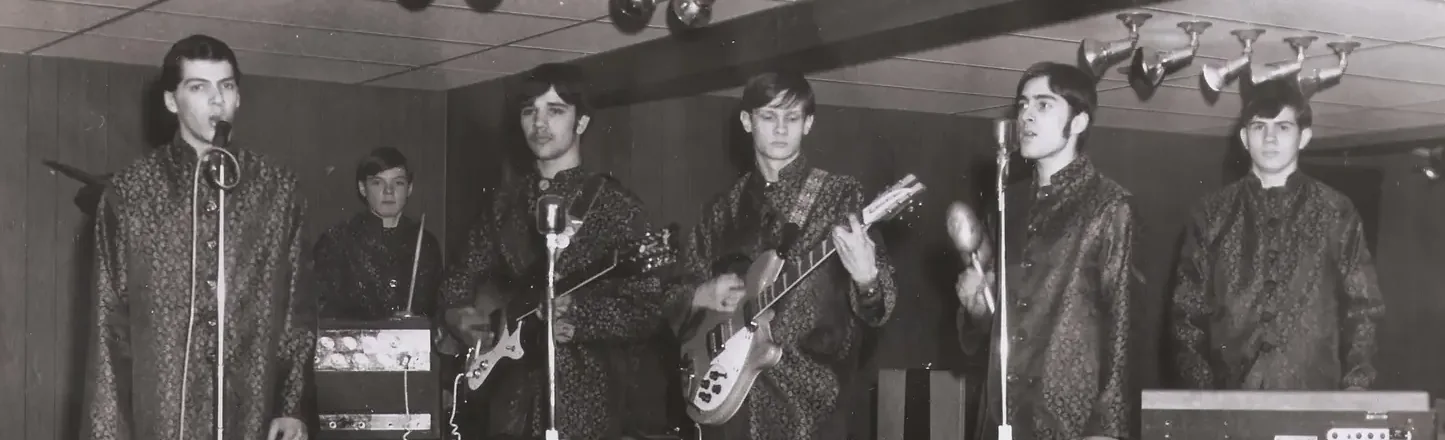
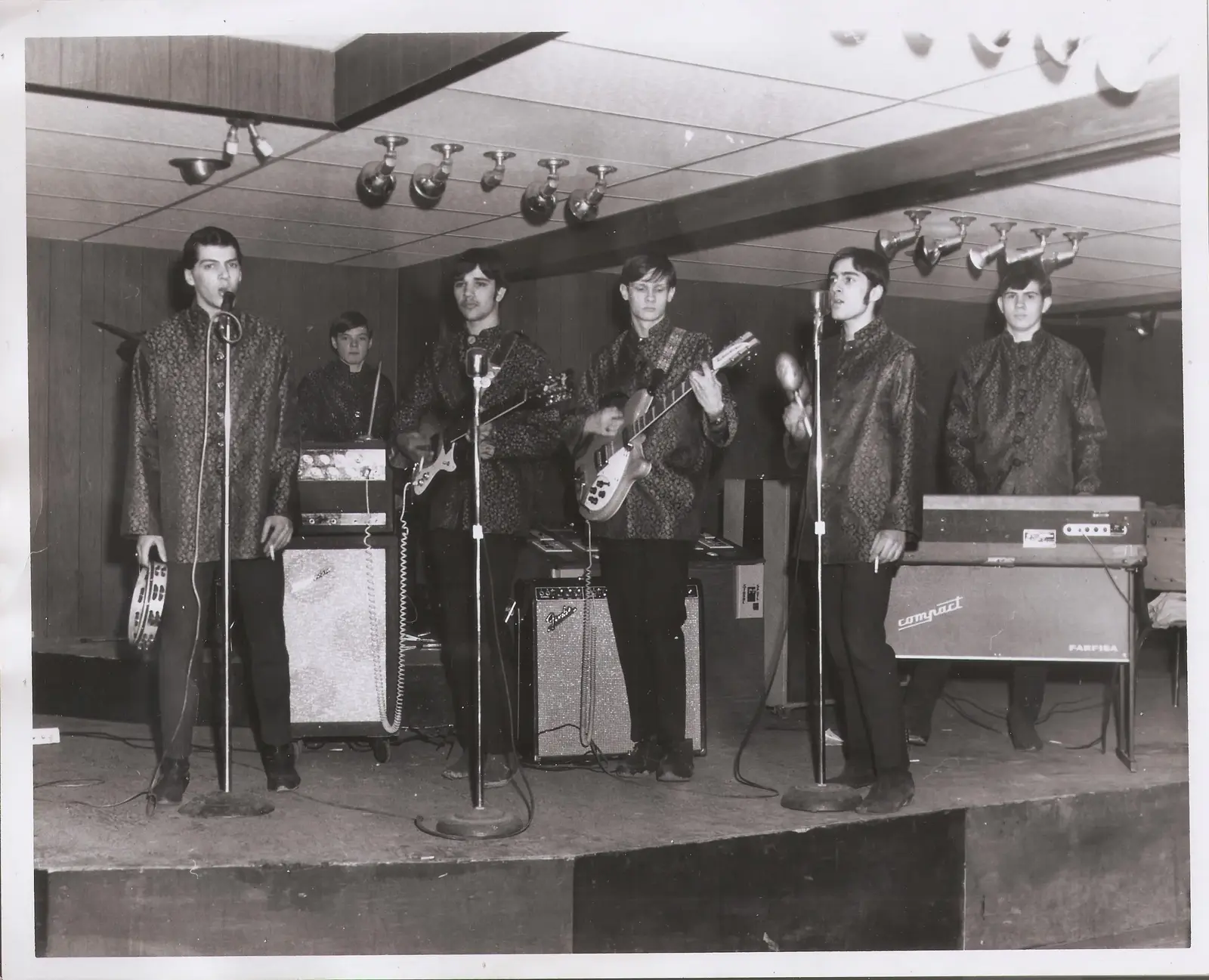
Greg flunked tenth grade, which meant he ended up graduating alongside his younger brother, Gerry. In eleventh grade he started a band with Dave Abraham, John Hemlock, drummer Tom McCullough, and Jim Smedo — who had no bass player to work with, so he covered the low end with his left hand on the organ and played chords with his right. Nobody in the crowd realized there was no bassist until they knew enough about instruments to notice one was missing. Greg was deep into Steinbeck at the time, and The Grapes of Wrath was his favorite novel, so that became the name. Their look was pure 1966: matching Nehru jackets they called their “Beatle outfits.”
1966 The first gig, and a getaway
Their very first job was the high-school Thanksgiving “can hop.” Admission was a can of food for the needy, and Greg doesn’t remember getting paid a dime for it. Charity in, charity out — the band would bookend its whole life that way. Their first real gig, at the Central City teen canteen, went sideways fast. Some local toughs decided one of the guys hauling in gear had taken a spot that was theirs, and the night ended with the band being chased out to their cars. Somebody’s windshield got broken. Greg blew a radiator hose on his parents’ green Pontiac — the one with the double fins — flooring it to get clear of them. The take that night: eight dollars a man.
1967 – 1969 The Cage
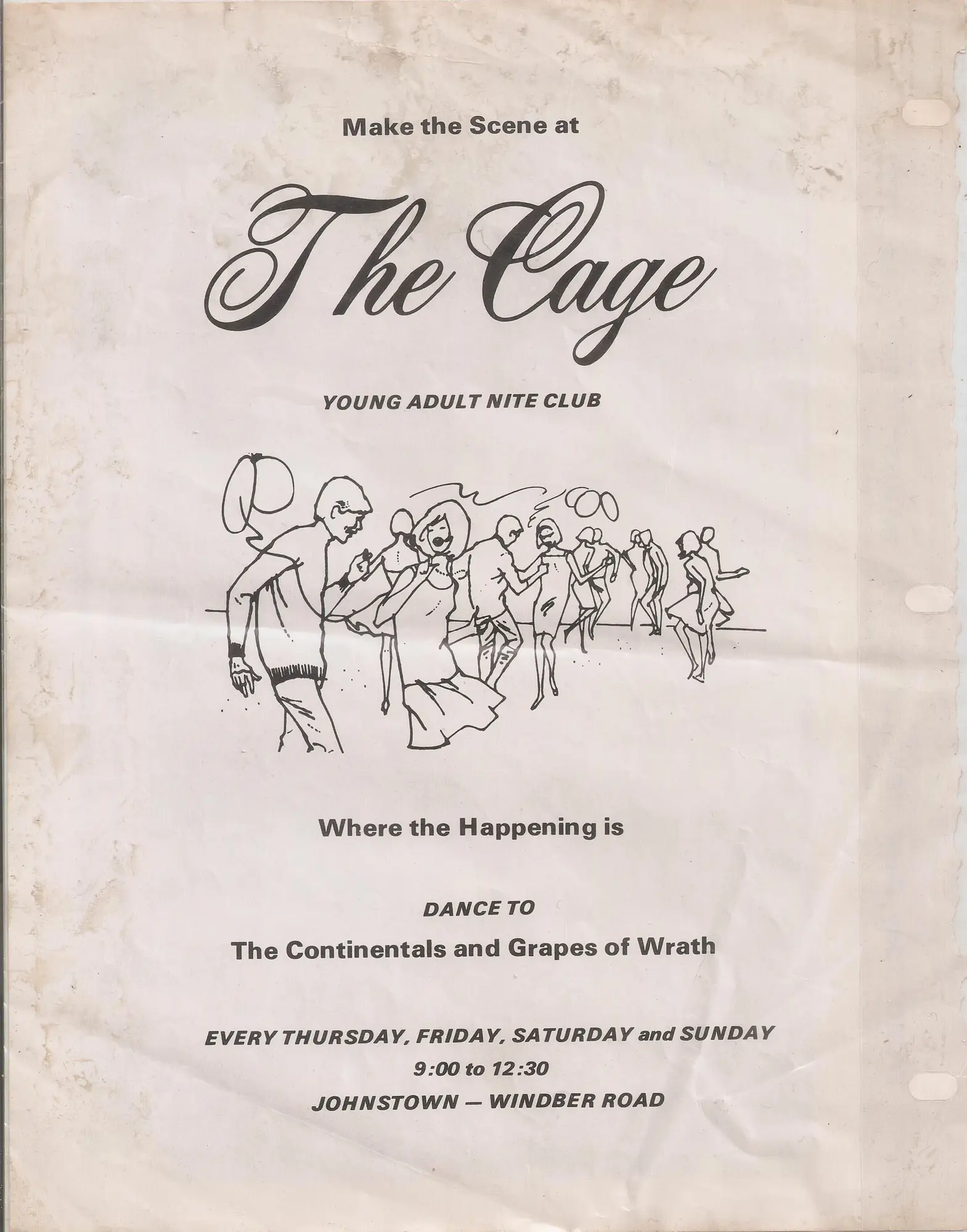
Home base was the Cage, a teen club tucked behind a bar and restaurant run top to bottom by the Trovato family. Carm Trovato would stamp the kids on the back of their hands, collecting 25 to 50 cents each through a little hole in the wall. (The same building is now Flood City Church.) The Trovatos handed the band a set of keys and let them rehearse whenever they wanted, and that constant, unglamorous practice is the whole reason they got good so fast. They learned every song by ear off 45s, leaning over a little record player, playing a passage, lifting the needle, playing it again, until they had it note for note. Nothing was written down — no charts, no lyrics, all of it memorized. Practices ran into marathons; the guys half-joked they’d moved in, and they all became deadly foosball players between run-throughs.
When the Grapes of Wrath started out, the Cage’s house band was the Continentals, an older, tighter soul outfit. Over time the two bands began working the same nights, each with its own stage, alternating sets so one could take a break while the other kept the kids dancing straight through the evening. The Continentals held the main stage, about two feet off the dance floor, while the Grapes of Wrath made do with a tiny makeshift stage off to the side, barely a few inches up. Eventually the Grapes of Wrath got popular enough to take the main stage for themselves — and the little side stage was torn out for good.
September 1967 Gerry and Joe come aboard
John Hemlock got married and needed a job that actually paid, so he left. His spot got filled by two people: Greg’s brother Gerry, who sang high harmony and played tambourine and maracas, and Joe Nemanich, who took over rhythm guitar and never sang a note if he could help it. Gerry and Greg had taught themselves harmony as kids, singing along to Beatles records at the family record player around ’63 and ’64 — no lessons, just two brothers learning the parts by wearing out the vinyl. Joe was the quiet one, no showman at all, but he had the best ear in the band for pulling a song apart and figuring out exactly what the guitar was doing.
The Cage was home, but it was never a standing gig — some weeks they played there three or four nights, and some weeks hardly at all, when better-paying jobs came along and pulled them out of town. There was always work to be had: nearly every little town within fifty to a hundred miles had a teen canteen, and Kindred Spirit worked them all — Somerset, Central City, Duncansville, Hollidaysburg, Berlin, and St. Marys clear up near the New York line. They played the Saturday-night dances at the Carrolltown church hall run by Bob and Liz Vermette, took weddings, proms, and post-proms, and turned up anywhere with a room and a plug — the church in New Germany, Grove Hall, the recreation park up in Windber. If there was a hall and electricity, Greg would book it.
Nov. 24, 1967 Battle of the Bands
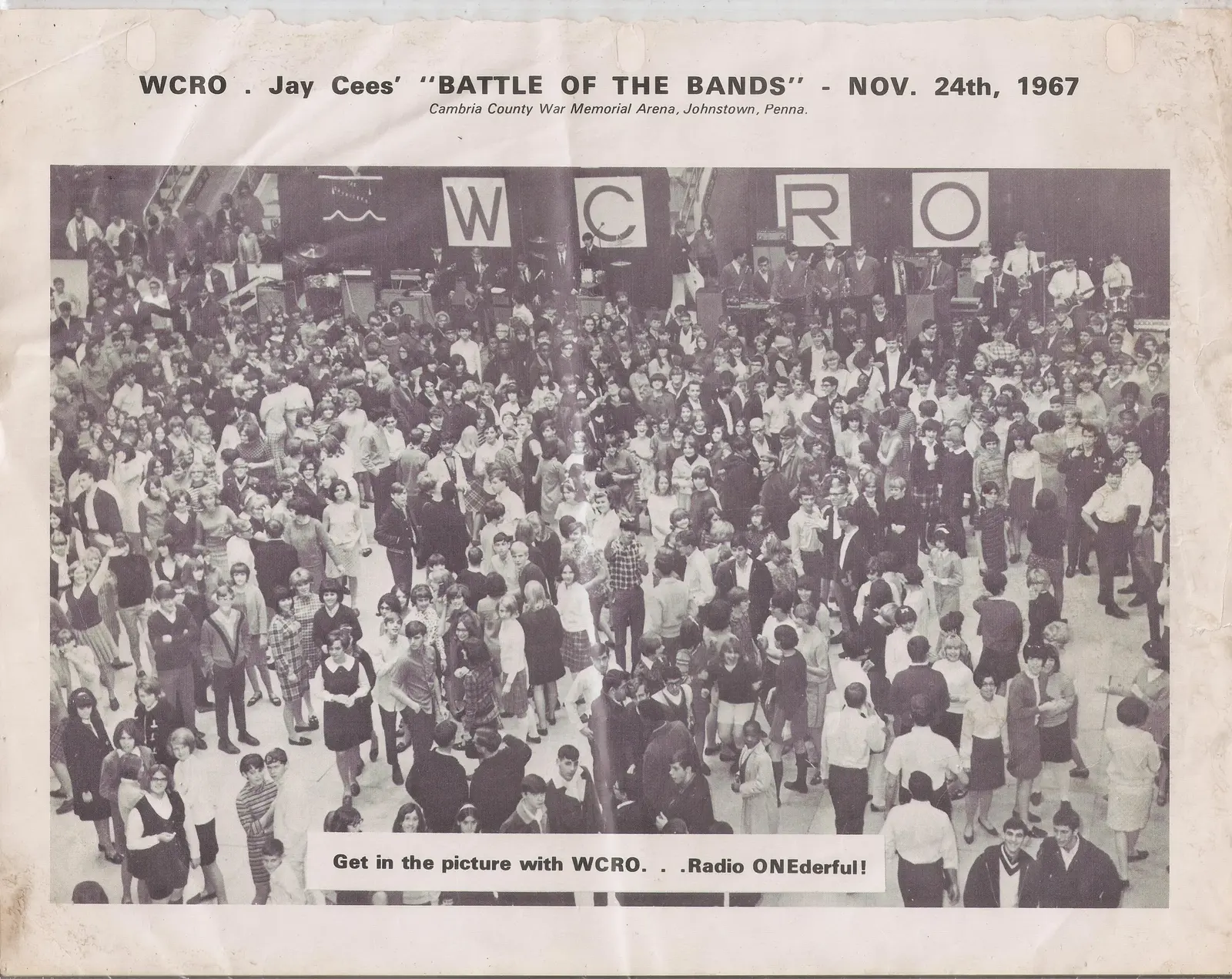
The night that stuck from those Grapes of Wrath days was the Battle of the Bands that WCRO radio and the Jaycees threw at the Cambria County War Memorial on November 24, 1967 — and one of the people watching the Grapes win was a rival who’d later join. John Galiote was still in high school then, playing in a well-drilled soul band called Attraction and Company — good players, some fabulous singers, put together by a local named Carl Hasselrig — and his band was one of the acts up against them that night. What John never forgot was the whole room jumping up and down when the Grapes tore into “Under My Thumb.” They were just too popular, and they took the prize. John lost, figured they were pretty good, and had no idea he’d ever get a call from them. Joe Nemanich spent the rest of the night wandering around quietly saying, “I’m so proud.”
They even went out live on the radio once, playing a set broadcast from the Mr. J.A. and Ms. J.A. pageant dance at the Masonic Temple, a private affair closed to the public. This was before FM, and the AM disc jockeys hosting it didn’t know the first thing about rock and roll — well-meaning, but completely out of their depth and reading the band’s song titles wrong right on the air. They announced the Bee Gees’ “Spicks and Specks” as “Spits and Specks” and fumbled the rest for good measure. A recording of the broadcast survives, but the quality is too poor to be worth sharing.
1968 Exit the mad genius
Dave Abraham could really play. He was also, by everyone’s telling, a terrible band leader. During a live set, right when the crowd was up and dancing, he’d hit his guitar solo and simply refuse to end it — stretching thirty seconds into ten or twelve minutes on his twelve-string Mosrite, grinning at the rest of the band while they stood there waiting for the little riff that was the signal to come back in. He’d hold it hostage just to watch them squirm. At rehearsals it was worse: the band would be trying to learn a slow Bee Gees ballad and Dave would be off in the corner playing “Foxy Lady,” laughing every time somebody said his name.
And he could be genuinely dangerous. One night, driving the band home from practice at the Cage, he took the four-lane bypass in pouring rain on bald tires, sawing the wheel left and right for the fun of it. The station wagon crossed the median, a Buick clipped it right behind the back seat where all the gear was piled, and Dave laughed the whole way through it. The entire band was hauled off by ambulance — and the ambulance wrecked too, on the way to the hospital. John Hemlock’s cousin Bob Seth, riding along with them, came out of it with a busted leg. Between the antics and the near-misses, that was the last straw, and the band voted Dave out.
1968 The fight over the name
The band voted Dave out — they’d had enough of his antics. However, Dave claimed the name Grapes of Wrath was his to keep. Dave went all the way to the musicians’ union claiming the name was his — a heated meeting downtown, Dave’s mother there yelling, protecting her son. The union sided with Dave, and the band was told, flatly, that they could no longer use the name.
So they ran a contest — a hundred dollars to whoever could come up with a new one. By then the Grapes of Wrath were popular all over the Johnstown area, and one day a small crowd gathered at the Falvo house on Church Avenue, everyone throwing out names and getting nowhere. Greg and Gerry’s father, Anthony Falvo, sat there certain they’d never land on anything. Finally he got up and started pacing the dining room, looking around the house and calling out whatever his eyes fell on: “Why don’t you call yourselves the Windows? The Floors? The Lamps, the Chairs? Hey — how about the Doors?” “Dad,” Gerry cut in. Their father had no idea there was already a famous band called the Doors. The family laughed about that one for years.
In the end it was their mother, Carmela Falvo, who landed it. They all thought alike, she said — they were kindred spirits. The name stuck: Kindred Spirit, no “the,” the way the Beatles were never “the Beatles.” Fans assumed the contest was rigged for Greg’s mom. It wasn’t. And by the family’s own admission, she never did collect the prize.
Sorry, Carm — rest in peace. We owe you $100, and we love you.
1969 John Galiote auditions at the Cage
With Joe Nemanich moved up to lead, the band needed a rhythm guitarist, and by then John Galiote had already spent most of his life in bands — the Fairlanes in junior high, the Echoes in high school, then Attraction and Company and Purple Glass. He’d first learned guitar as a little kid from a barber named Bill Lent, picking up chords between haircuts, and he was sitting in with Lent’s country band by the time he was eight or nine. Fresh out of Bishop McCort and a month or two into weighing whether to go to college, he got a phone call from Greg. Kindred Spirit was one of the hottest bands around, and John decided college could wait.
Greg had found him by word of mouth — John never did learn how — and invited him up to the Cage to try out. Nobody doubted he could play; they just wanted to hear it. John brought his own guitar, a nice ’65 Jazzmaster, but Joe had other ideas: he owned two Rickenbackers, and he handed John the six-string to play while he kept the twelve. John held his own, and Joe gave him the compliment he never forgot: “You could back me up anytime.” The word came from Greg soon after — “We want you.”
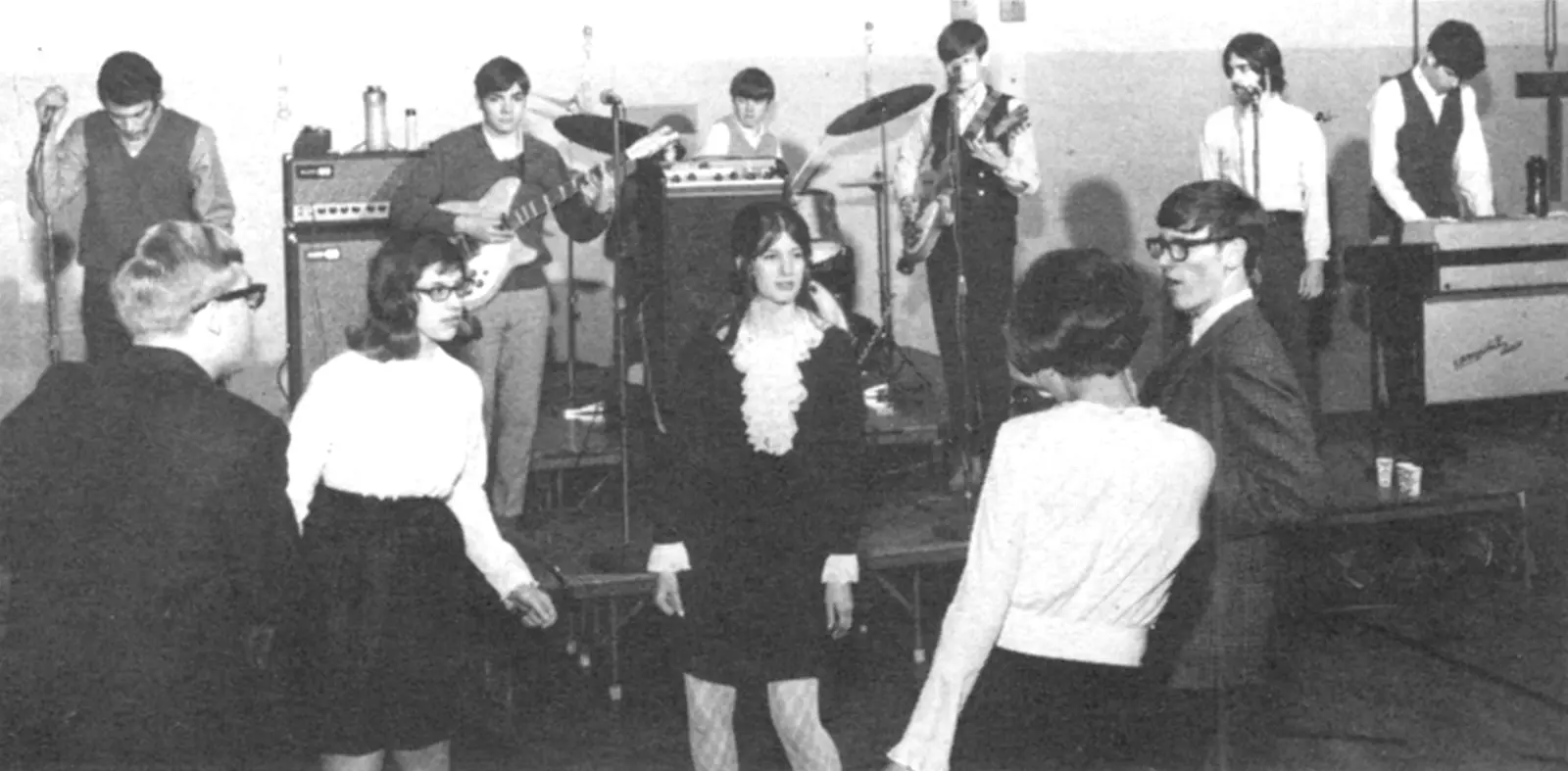
Then it was over to Joe’s house to learn the whole set. John was young and it came easy; he already knew a lot of the songs off the radio and picked up the rest fast, and inside a week or two he was up on the Cage stage for the four-nights-a-week house gig. He stayed almost two years before leaving for college and a thirty-year career teaching the hearing impaired. That six-string Rickenbacker he borrowed on his first night is still around Johnstown, in the hands of another local guitar player.
1969 A day in New York
Gerry got drafted into the Marines and shipped to Parris Island; Karl Mundok came in to cover his spot. The record itself happened because of one man: John George, who ran George’s Song Shop, a record store downtown on Market Street. George had his own little label, Moxie, and he fronted the money to put the band on tape — which, in those days, meant a band signed away just about everything for the privilege of making a record. He was a shrewd businessman and a hands-on producer, the kind who stood over the session pushing “faster, faster, faster” and had Jim Smedo overdub layer after layer of keyboard sounds onto “Under My Thumb.” Greg has never stopped being grateful to him for making it happen at all.
George picked the band up in the van at four in the morning and drove them to a studio on Broadway. For a bunch of kids from Johnstown, a real New York studio was another world — big reel-to-reel machines everywhere, and an engineer who stuck Tom McCullough off in his own little isolation booth to cut the drums. For some of them it was the first time they’d ever set foot in New York City, and they were there for exactly one day.
The strangest part came on the way out. There was a band called Spirit — the group that actually did “I Got a Line on You” — up on the marquee, and as Kindred Spirit walked out of the building, people crowded around them wanting autographs. For a giddy minute the band thought they’d somehow arrived: who in New York could possibly know Kindred Spirit? Then it clicked. Nobody did. The fans had them mixed up with Spirit, and no amount of insisting could untangle it — “No, no, we’re Kindred Spirit.” “What do you mean? You’re Spirit.” “You said you’re Spirit.” “Yeah — you’re Spirit.” They gave up and signed a few anyway.
While Greg stayed behind to sit in on the mix, the rest of the guys wandered off into the city and ended up in the audience for a taping of The Price Is Right, back when Bill Cullen was hosting. When the mix was done, the word from the studio was simple: “That was a take. You’re good.” And John George wasn’t about to spring for a hotel — “Get in the van” — so they climbed back in and drove the whole way home to Johnstown that same night.
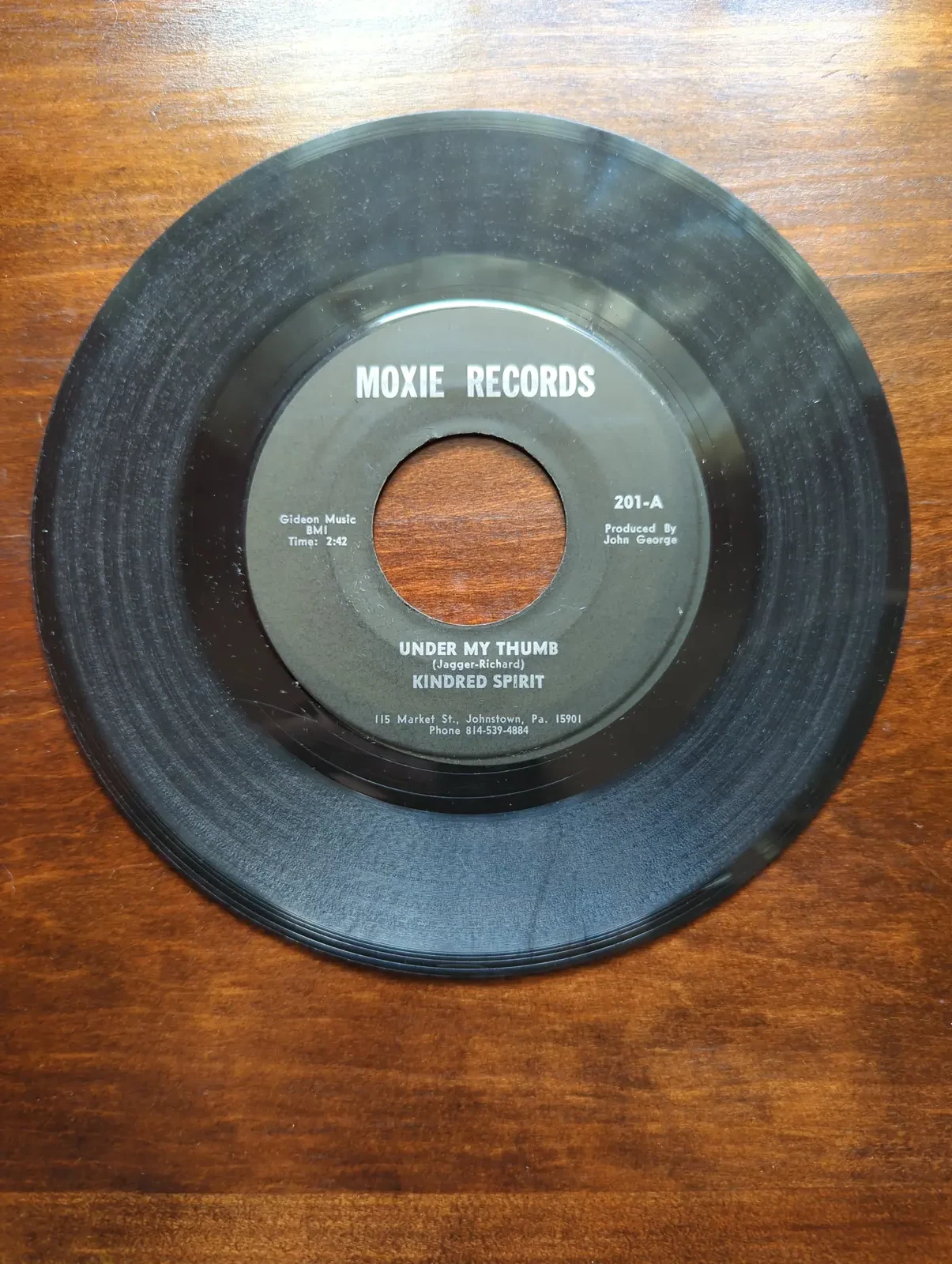
The single came out a few weeks later — “Under My Thumb” backed with “Blue Avenue,” on Moxie and later picked up by Mercury’s Intrepid. It went number one around Johnstown for weeks and, for reasons nobody could ever explain, caught on down in Savannah, Georgia. There was no money to promote it any further, and Greg’s total royalties came to a single check for about three dollars.
Hear the record in the tape deck:
~1969 The night they couldn’t play
Almost every rehearsal happened at the Cage, so the one rare time the band practiced in John Galiote’s basement instead, it came back to bite them. Jim Smedo’s Farfisa organ ran on a separate power pack — no pack, no keyboard — and when they loaded out to head for that night’s job, the power pack got left sitting back at John’s house. Nobody noticed until they’d driven the whole way to a fraternity party in State College.
There was no working around it. Jim didn’t just play the keys; he was also the band’s bass player, thumping the low end out on the Farfisa’s left-hand keys, so one forgotten box knocked out two instruments at once. The frat house was packed and waiting, and all the band could do was admit they couldn’t play and leave the crowd to records. They hung around a while, miserable, then loaded the gear back up and drove home. Only later did John find out how it happened: his own father had spotted the strange little box at the house, had no idea it belonged to the band, and moved it out of the way.
Early 1970s The offer they turned down
There was a brush with the big time that most people never heard about. Buddha Records, out of Pittsburgh, had them learn a stack of bubblegum tunes and come audition. The label liked what it heard — but only wanted Greg and his brother out front, backed by studio musicians, not the actual band. Greg said no. They were a band, all of them or none of them, and that was the end of it. He liked to joke about it afterward: he and Gerry could’ve been bubblegum stars.
1970 The nine-piece horn band
With Chicago and Blood, Sweat & Tears everywhere on the radio, Greg blew the band up to nine pieces with a full horn section. Only Joe Nemanich, Jim Smedo, and Greg carried over. Greg still calls it the best band he was ever part of. They cut a second single, an original called “Peaceful Man,” backed with a cover of the Flock’s “Clown,” again through John George and Intrepid. The writing on “Peaceful Man” was a genuine three-way split — Paul Lanzendorfer wrote the verse chords, John “Poncho” Garshnick wrote the words, and Greg wrote the melody, the harmony, the bridge, and the horn arrangement. They signed with a Pittsburgh agency and started reaching for bigger rooms and college dates.
Hear the record in the tape deck:
Summer 1971 Roxbury Park and the anthem
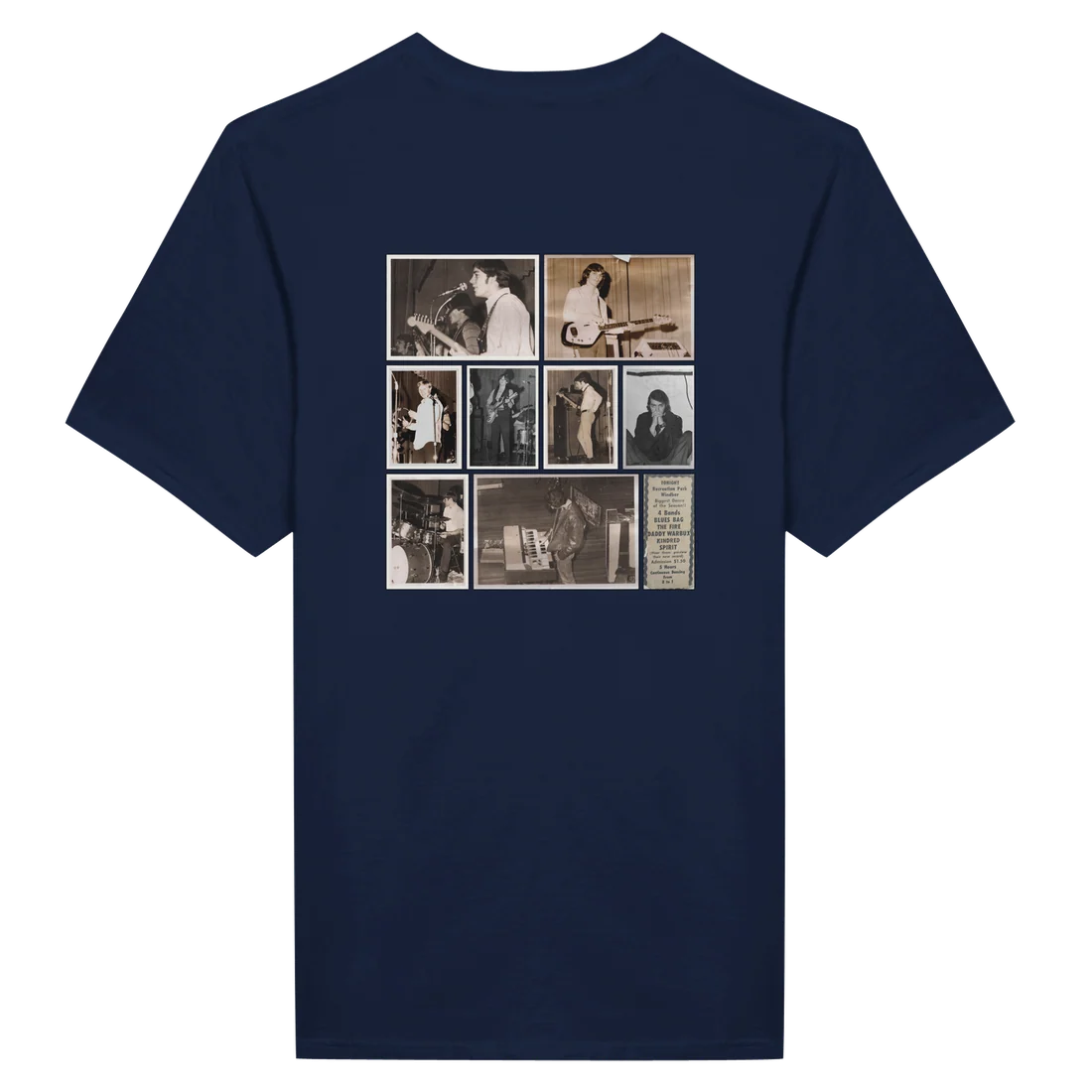
In the summer of 1971 the horn band played one of the big Sunday-afternoon shows at Roxbury Park, hundreds of people packed in, everyone from teenagers to grandparents. The band had turned pretty political by then — the Vietnam War was at its ugliest, and in Greg’s own words they were stark raving hippies — and they’d written an original to say so, a subversive number called “You’re Going Under.” They built the whole moment around it. The horns opened with a straight, respectful “Star-Spangled Banner,” and the crowd rose, hands over hearts, saluting. Then the anthem slid into Jimi Hendrix’s snarling Woodstock version and the older folks froze — what are they doing? — and out of that the band dropped straight into “You’re Going Under,” right there in front of the whole park.
It went over exactly as provocatively as it sounds. A fight broke out in the Tribune-Democrat’s Reader’s Forum and ran for weeks — letter writers called the band a detriment to society and accused them of desecrating the national anthem, and Greg wrote back to the paper to defend them. It was the horn band at its boldest.
Greg and Gerry’s father, Anthony Falvo, was in the crowd that afternoon — the one and only time Anthony ever came to hear his sons play. Anthony was a big-band man, raised on Sinatra, Perry Como, and the Italian crooners, and he rarely handed out praise. As the band tore down afterward, Anthony walked up to Greg and said simply, “You guys are pretty good.” To Greg it landed like being told they were the Beatles. Anthony spent much of the show behind a camera too, and shot a whole roll that day — some of which Greg still has.
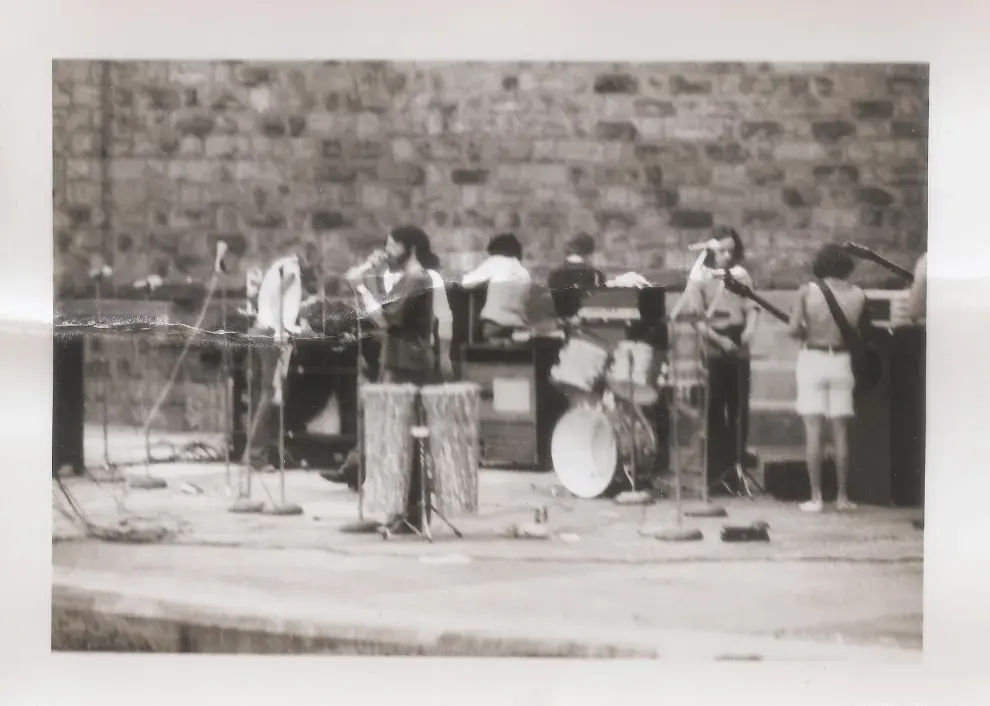
Roxbury was the peak of the nine-piece, and close to its end. By then the band had signed with a Pittsburgh agency, Go Attractions, run by Rich Engler and Paul St. John out of a little office in Shadyside, and the jobs were getting bigger — college dates, better rooms. Greg and about half the band wanted to go all in and live in the city, so they rented a rambling old house on Shady Avenue — eight or nine bedrooms, two kitchens, practically a mansion. The other half wouldn’t leave Johnstown. With the band split between two towns and the rent coming due every month, the Johnstown players balked at paying for a house they didn’t live in. Nine strong opinions, the substances everybody was into in the early ’70s, and the constant money friction wore the whole thing down — and this was the band Greg still calls the best he was ever in.
The literal last straw was a wreck. Jim Smedo’s van — the one tied up in the move to the city — flipped onto its side in a crash up near Erie, and it never got repaired. By the band’s own telling, that wreck is what finally finished off the version of Kindred Spirit that had tried to make it in Pittsburgh.
1971 – 1974 Same name, new faces
After the horn band came apart, Greg simply kept rebuilding — “nine or ten iterations” of Kindred Spirit, by his own count, all under the same name. Joe Nemanich was back on lead guitar, and Greg brought in John Falcho, an easygoing singer who could slip a little flute into a song on the fly. The drum chair never sat still: John Crookston, Chris Klym, Danny Adams, and Tommy Gajewski all cycled through it.
Gerry came home from the Marines in June of 1971. The day after he got out he was already rehearsing with a new band Joe Nemanich was starting, but it never played a note in public: Greg, tired of the horn band, folded it and asked Joe, Gerry, and John Falcho to be Kindred Spirit instead. Gerry came back on vocals and rhythm guitar — he had taught himself guitar in the service, with Joe mailing him chords and scales — and Joe walked him into Music Haven to set him up with a Fender Twin Reverb amp and a Gibson SG.
Gerry’s second run was short. The band rehearsed and played nearly every day, always loud and at full rock volume, and after about a year he was worn out on it. The break came over a trip south. A friend, Barry Robson, needed company driving his mother and aunt down to Jacksonville, and Gerry — with no real job outside the band — went along. Greg’s only condition was, “Make sure you’re back by Friday, we’ve got to play.” What got to Gerry in Florida was the quiet. There was no wall of rock music every single day, and he found he liked it. He bought a cheap acoustic guitar and brought it home, and when a friend named Donna Piro taught him fingerstyle, that settled it. Gerry told Greg he was done. It was the summer of 1972, and he never played in a rock band again — he turned to Christian music and sang around town in churches instead.
One night from those last few weeks stayed with him. The band was playing a Holiday Inn in Ligonier on a warm summer evening, and Greg called for one of the new songs Gerry wasn’t needed on. Gerry stepped out to enjoy the night air as the band prepared the next song. Gerry listened as the band argued over how to play the song — finally Greg cut through the bickering and counted off the song in frustration: “One, two — I’m the leader.” Gerry stood outside laughing to himself. He told Greg the story years later, and Greg swears to this day he doesn’t remember it.
1974 – 75 On the road
At the end of ’74 Greg put together a touring band to grind it out on the club circuit — Ed Cominsky on lead guitar, Karl Mundok on second guitar and vocals, Bill Striker on bass, Harry Levicky on keys. Six nights a week, sometimes seven, hardly ever a week off, working the upper Midwest through a Milwaukee agency tied to the Left Guard clubs the Packers’ Max McGee and Fuzzy Thurston had a hand in — Oshkosh, Fond du Lac, Green Bay, out into Minnesota. The lasting story is the Tasty Cake step van they traveled in throwing its engine on the way to Sioux Falls. Greg opened that night on no sleep and total laryngitis, singing through it because there was nothing else to do. It was a hard way to live, and by the end of ’75 it had worn itself out.
1976 The “Key” Band — the last one
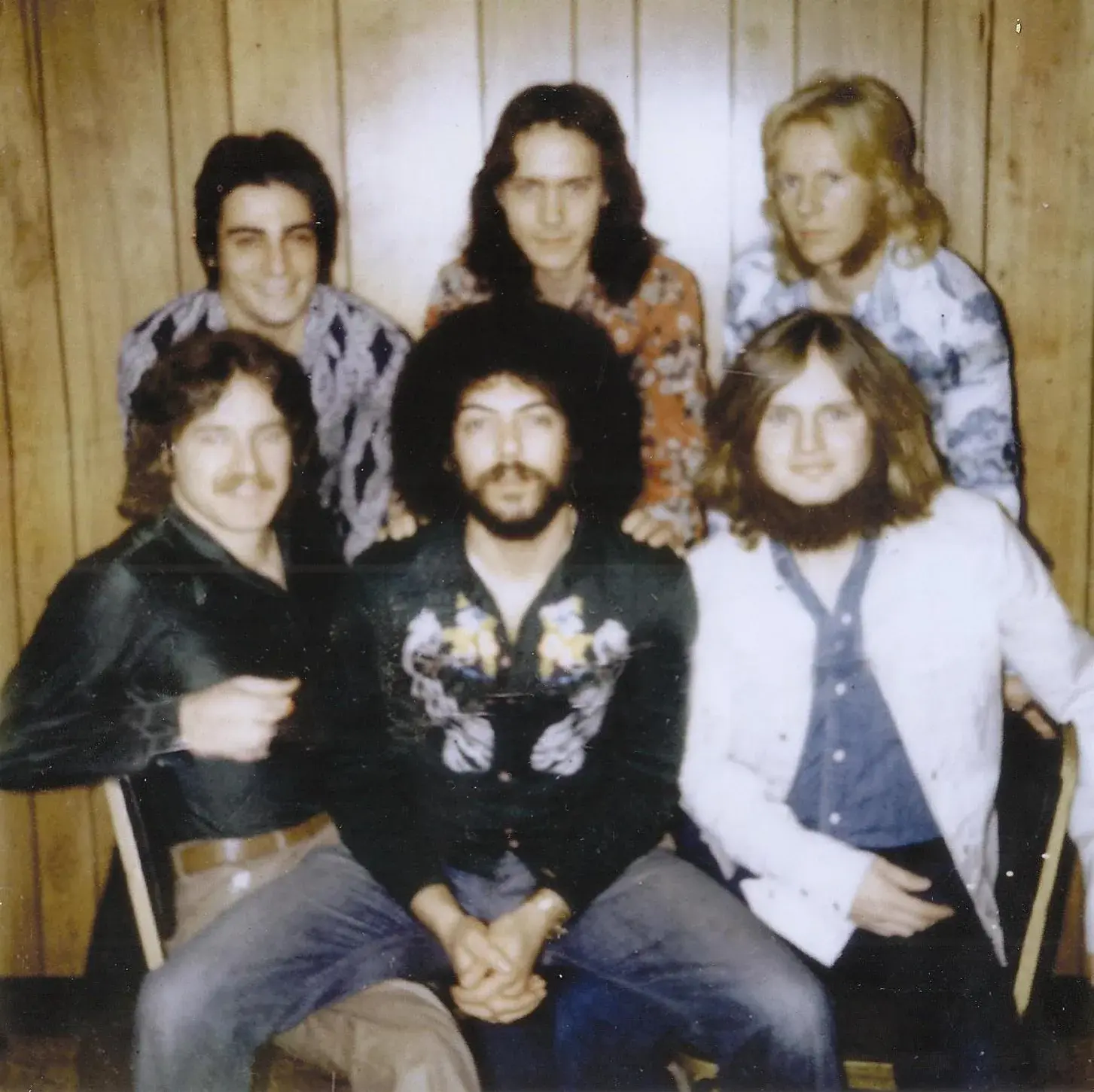
By 1976 Kindred Spirit had a steady home: the house-band chair at the Golden Key, a bar and nightclub in downtown Johnstown, six nights a week on a one-year Musicians’ Union contract that started that January. This last lineup is the one people around town still call the Key Band — Greg out front, Karl Mundok on guitar, John Crookston on drums, Joe “Baby Joe” Frank on bass (with Steve Spack taking over the bass chair later that summer), and a two-man horn section of Chuck Adkins and Tom Bell. It was the last version of Kindred Spirit, and the last one to carry horns.
The Golden Key’s owner was a hands-off sort, hardly ever on the premises — he left the running of the place to a manager named Chooch Boscola, and then to whoever came next — so it was a surprise when he turned up one afternoon during rehearsal and asked Greg to step into the office. Around September or October he’d decided to close the club and lease the building to a Chinese restaurant. Greg pointed out that the band’s contract ran to the end of the year, two months off. The owner didn’t blink: “Greg, you and I both know you could wipe your butt with a Musicians’ Union contract. You can finish out the month.” They finished out the month, and that was that — an inauspicious end to a full decade of Kindred Spirit, 1966 to 1976. The building did become a Szechuan restaurant; its descendant, Szechuan East, still serves up in Richland.
Greg half meant to leave town for good. He’d fallen for Cape Cod back in 1971, when a Harrisburg agency booked the band a three-night stand at the Otis Air Force Base NCO club and he stretched it into a week’s vacation, and he’d gone back every summer since. He was thinking about moving up there for real when he met his wife, Dar, and decided to stay in Johnstown. He kept playing a while longer in a band called Ruckus — a couple of buddies, about two years — before he finally hung it up and went into the car business.
1991 – 2000 The reunions
Fifteen years after the Golden Key, the phone rang again. Somebody in town — Greg thinks it was his old friend, the DJ Chuck Bender — put together a huge oldies reunion at Ace’s Lounge in the West End, rounding up just about every band that had ever played the Johnstown area from the ’50s through the ’70s, ten or twelve of them, with Kindred Spirit headlining. It was the fall of 1991, and the band had rehearsed hard. Then they blew the very first song. Greg’s voice quavered on him, Karl Mundok was off too, and the set never recovered — they should have opened with their old standby “Gimme Some Lovin’,” John Galiote always said, instead of the “Pictures of Matchstick Men” that train-wrecked on them. The place was jammed to the rafters and the crowd loved every minute; Greg was mortified anyway. Within days he decided the band was too well-remembered to leave it on a bad night.
So they put on their own show. Freddie Babish, who ran Ace’s, gave Greg a Saturday night at the end of March 1992 — and this time it was just Kindred Spirit, a three-set headline night of their own. Chuck Bender worked the room as MC and spun records between sets. The band promoted it themselves, paying for radio spots and selling tickets out of George’s Song Shop, the Music Center in the mall, and Ace’s, with Greg and John Galiote moving most of them by hand. Ace’s held four or five hundred, and they came close to filling it. After expenses everyone walked with about $186 — no fortune, but Greg had what he was really after: the redemption.
The redemption show set the pattern for the rest of the decade. Every couple of years Kindred Spirit headlined a benefit for the Spinal Cord Society, the charity run by Dave Kekich — a former powerlifter, paralyzed in an accident, who raised money for spinal-cord research. Those benefits ran at the War Memorial in 1994, 1996, 1998, and 2000. There was a real symmetry to it: Kindred Spirit’s very first gig had been a charity can hop back in 1966, and now, a quarter-century later, the band was passing the hat again. The reunion lineup barely changed from show to show — Greg out front, Joe Nemanich and Karl Mundok on guitars, Jim Smedo on keys, John Galiote on rhythm guitar, Chris Klym on drums, and Gary Frank on bass — with a handful of new songs added each time.
For the last two benefits, Gerry Falvo came home. Gerry was living in Florida by then, so Greg would settle the setlist over the phone and mail the songs down on tape. Gerry learned the vocal and rhythm-guitar parts on his own, then flew up for a rehearsal or two at This Is It, the little club Gary Frank’s family owned. In 1998 Gerry mostly sang backup, with a lead vocal here and there, and Joe Nemanich — who hadn’t really wanted to play that year — still came up to guest on a song or two. In 2000 Gerry both sang and played guitar. Best of all, at both shows the band handed Gerry the lead on the Beatles’ “Ob-La-Di, Ob-La-Da,” the same song he had sung out front before the Marines ever drafted him. The crowds were big and warm and mostly the band’s own age, and for Gerry the real reward was reconnecting with old friends and bandmates he hadn’t seen in years.
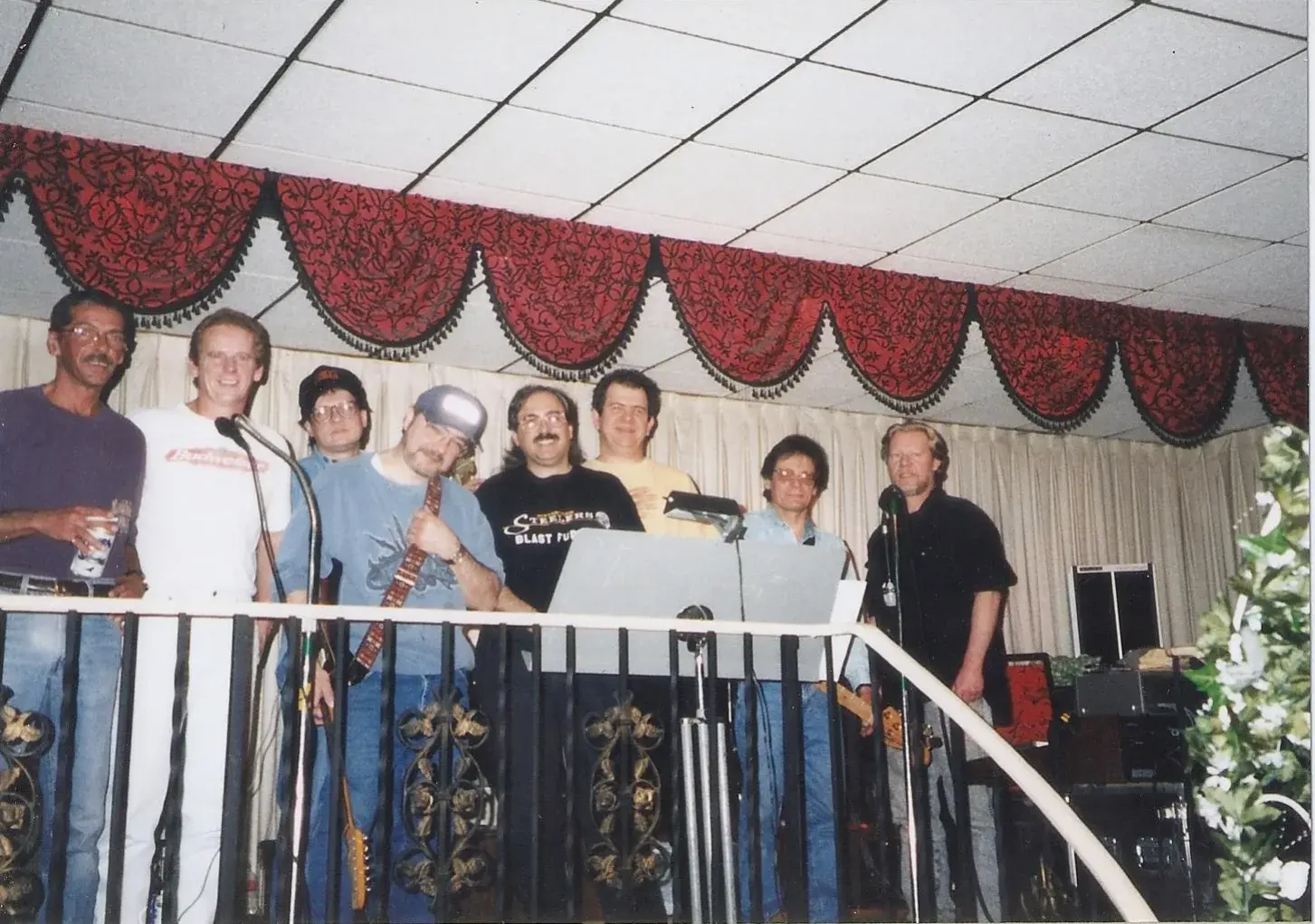
The 2000 show turned out to be the last. They planned another for January 2002, but bassist Gary Frank died that January, and with him went both a bandmate and their rehearsal home at This Is It. The reunion quietly fizzled. It had gotten harder anyway — the guitar players hated changing keys, and Greg, pushing fifty, was trying to sing what he’d sung at twenty-one.
The truest reunion moment came later, and offstage. When drummer Chris Klym died, his friend Denny Regan asked Greg for the band’s live War Memorial recording of “In-A-Gadda-Da-Vida” to play at the memorial. As the intro chords came up, Greg leaned over to John Galiote and whispered, “What are the old people going to say?” John looked him dead in the eye and answered, “Greg — we are the old people.” As Chris’s recorded performance of “In-A-Gadda-Da-Vida” played, the whole room rose to its feet, laughing and crying — a standing ovation.
Know a date, a name, or a story that belongs here? Help fill in the record →